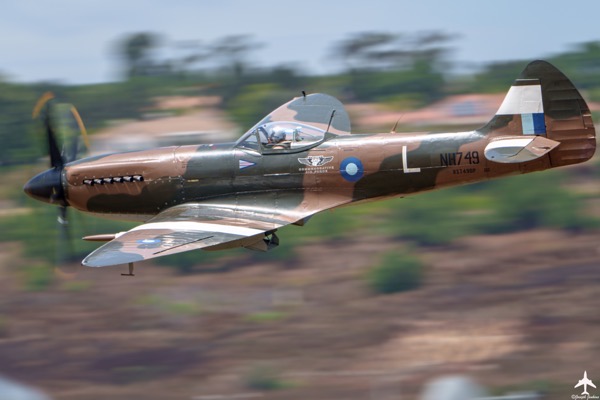
Supermarine Spitfire – 2023 Camarillo Airshow

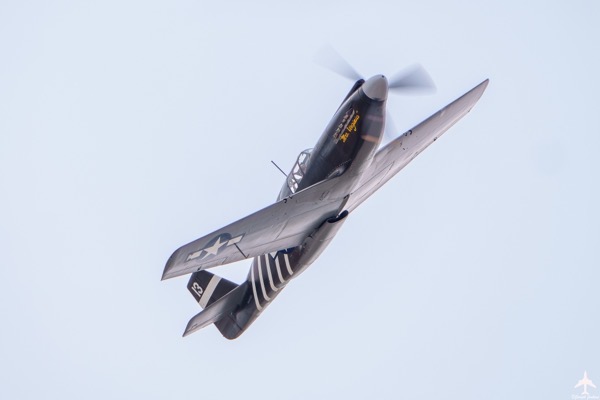
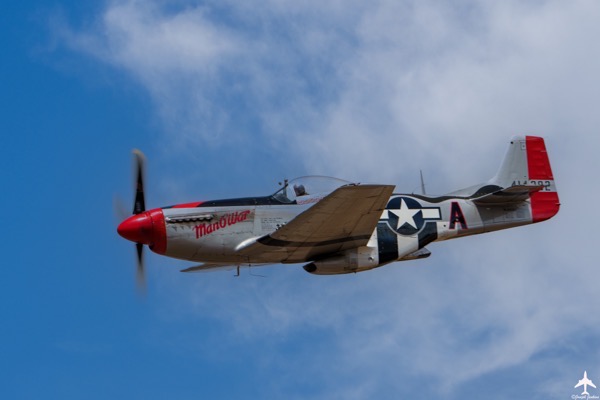
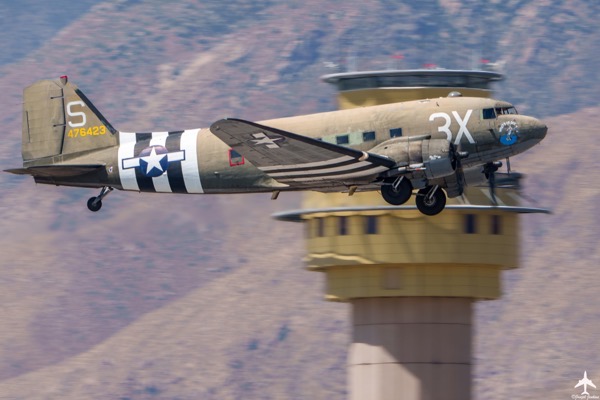
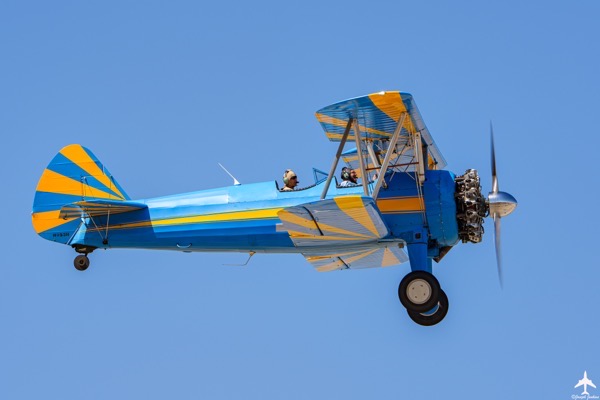
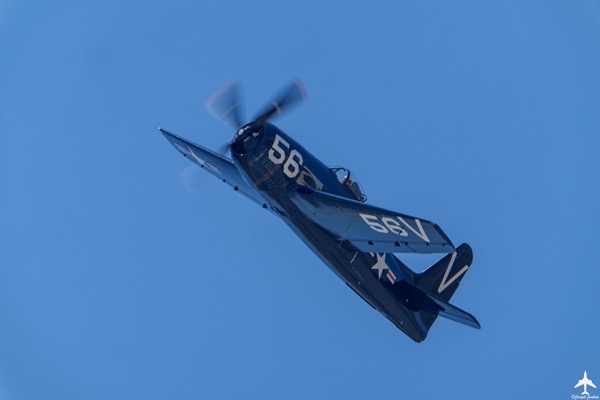
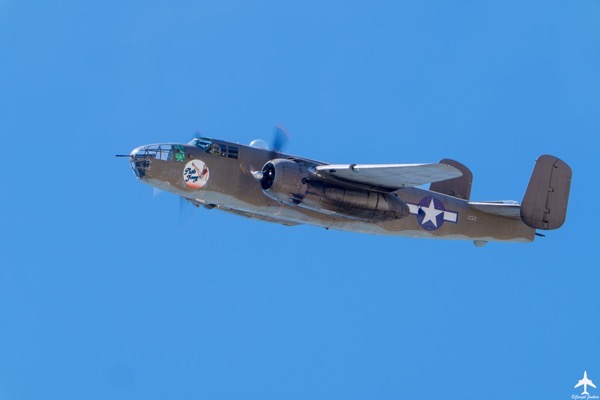
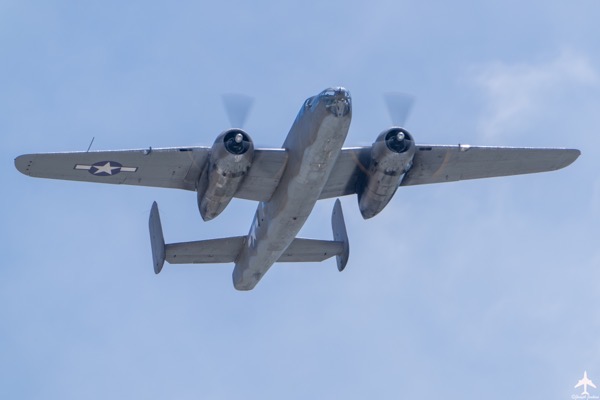
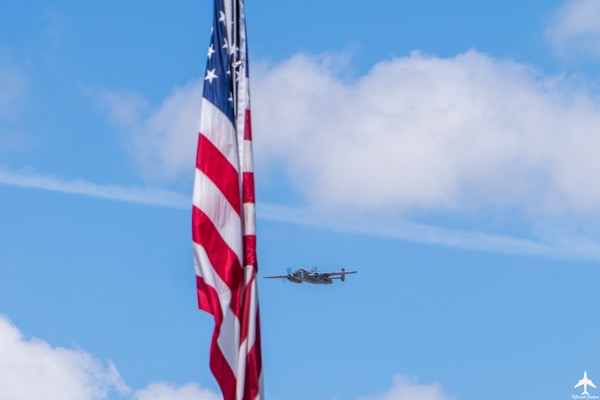
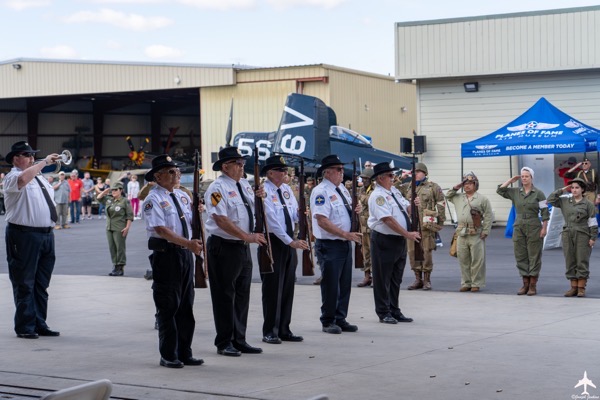
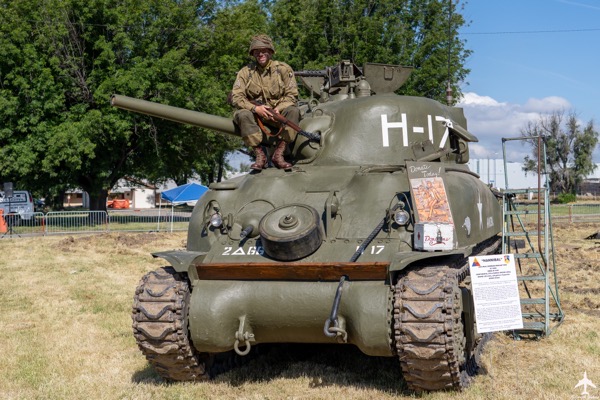
Don’t get to see too many of these flying. Beautiful WW2 plane that helped save the British during the war. These were shot during the 2023 Camarillo Airshow and is part of the Commemorative Airforces Planes.

Details about this particular Spitfire:
Only 957 production Mk XIVs were built. It was the first Spitfire in large-scale production with the V-12 Rolls Royce Griffon 65 engine, and entered service in 1944. The Mk XIV was the most successful of all the variants at destroying V-1 flying bombs, accounting for 300 kills. In October 1944 a Mk XIV had the distinction of being the first to destroy a jet-powered Messerschmitt Me 262.

Our Spitfire was built at the Aldermaston factory in Berkshire, England and then delivered to the Royal Air Force. The aircraft was shipped to Karachi, India in July, 1945 for anticipated operations in Southeast Asia. In 1947 it was transferred to the Indian Air Force.

In 1983 the aircraft was found badly damaged in Patna and was returned to England. It was restored and flew again at Cranfield in 1983. The aircraft was painted in the colors of the South East Asia Command.

In 1985 the aircraft was purchased by David Price and shipped to Los Angeles. That year the aircraft won an award at the Oshkosh Air Show. Now owned by the CAF, this Spitfire Mk XIV is at the CAF, Southern California Wing’s Hangar at Camarillo Airport. It is currently in flying status and is available for airshow bookings year-round.

2023 8 19 Camarillo Airshow 135 extedit Instagram2023 8 19 Camarillo Airshow 153 Instagram

West Coast Rhino Demo Team performance at the Wings over Camarillo Show

This past weekend was the Wings over Camarillo Airshow. Unfortunately due to Hurricane Hillary we only got to have one day of it. This is excerpts from the Rhino Demo Team performing along with a few shots from the day.

“The aircraft for you today is the F-model which incorporates a two-place cockpit to accomplish the side mission. In today’s demonstration we have Lieutenant West, Trash Blaster Perkins from Georgetown, Texas and the WSO for you today’s Lieutenant Jonathan Runn Datsin from Gallus, Georgia. During this flight, they will experience G forces from -3 up to 8 times the normal force of gravity. In speeds as fast as 700 mph and as slow as 100 mph as they maneuver the aircraft to the edge of its operating envelope. Ladies and gentlemen, please direct your attention to the left. Where in a moment you’ll hear the Rhino’s 2GE F404 Turbo Fan Engine spool up with their maximum power. After a brief systems check, They are going to release the brakes allowing the engine’s 44,000 pounds of thrust to accelerate the aircraft to its takeoff speed of 130 miles per hour. On takeoff they’ll perform a low transition, raising the landing gear and accelerating to 400 miles per hour to give you an up close look at the power of the Rhino just 50 feet off the ground. the end of the runway they will pull seven teams into the vertical. Ladies and gentlemen from the left the West Coast Rider Industries team let’s get it!”2023 8 19 Camarillo Airshow 230 extedit Instagram2023 8 19 Camarillo Airshow 118 extedit extedit Instagram2023 8 19 Camarillo Airshow 223 extedit Instagram2023 8 19 Camarillo Airshow 250 Instagram

August Hangar Talk at Planes of Fame TBM Avenger

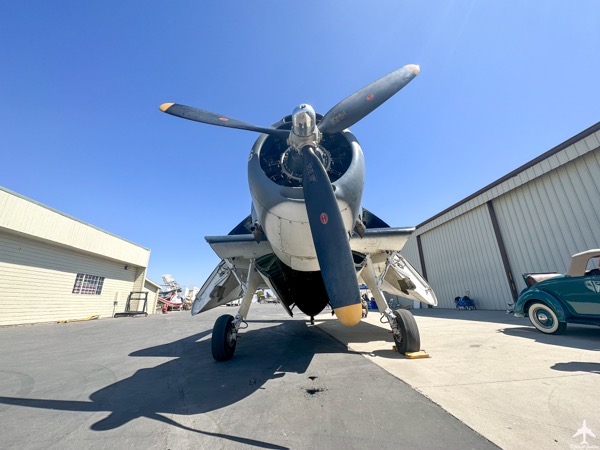
The August Hangar talk was the museum’s TBM Avenger Torpedo Bomber. From their description of the plane:

The TBF/TBM “Avenger,” designed and first built by Grumman Aircraft and later produced in greater numbers by the Eastern Aircraft Division of General Motors, was the definitive torpedo bomber of WWII. Rugged and versatile, its service continued in military circles into the late 1950s. “Avengers” also flew as firebombers with the U.S. Forest Service and in other civilian roles until the 1980s.

The aircraft first took form in 1939 when the U.S. Navy issued specifications for a new aircraft to replace the obsolete Douglas “Devastator” torpedo bomber. Grumman, highly regarded for their sturdy, high-performance Naval fighter aircraft, engineered a well-armed bomber capable of carrying up to 2,500 lbs. of torpedoes, bombs, and depth charges in an internal bomb bay as well as rockets, fuel drop tanks, or radar pods on its wings. Named the “Avenger” by the Navy, the aircraft featured a bulging all-metal fuselage with a mid-wing configuration. To optimize storage on even the smallest of aircraft carriers, the wings folded back against the fuselage. The crew consisted of the pilot; a rear-facing gunner in an electric gun turret; and a radio/radar operator/bombardier.

Production of the first 286 TBF (“F” for Grumman) aircraft began in late 1940 with delivery in January
1942. At that time, based upon the Navy’s demand for the “Avenger” as well as for other Grumman fighters (F4F and F6F), production was sub-contracted to the Eastern Aircraft Division of General Motors. This division, comprised of five now-idle automobile factories, would produce 7,456 TBM (“M” for General Motors) aircraft over the next three years. Grumman built a total of 2,383 TBF aircraft.

During WWII, the “Avenger” served with the U.S. Navy and Royal Navy in the Atlantic where they played a key role in stopping the German U-boat threat against Allied shipping. In the Pacific, the torpedo bombers were involved in the sinking of twelve Japanese aircraft carriers, six battleships, nineteen cruisers, and twenty-five destroyers and smaller craft. U.S. Navy and U.S. Marine Corps
“Avengers” dropped 32,700 tons of bombs/torpedoes and shot down ninety-eight enemy aircraft.
The aircraft continued to serve in the Korean War, although limited to radar and utility capacities.
IMG 1616 InstagramIMG 1592 InstagramIMG 1586 InstagramA1100095 Instagram

2023 Memorial Day Flower Drop at the Palm Springs Air Museum

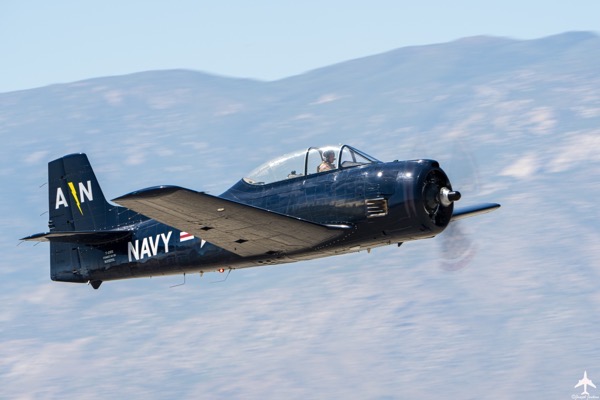
Not as many planes this year flying around, but the day was cooler and the breeze was nice. Was a great event to honor our warriors. The event was fully packed with music, entertainment and of course planes. Both static and planes flying around. Took a few shots of planes flying around and of course everything at the Palm Springs Airport is beautiful with the mountain as a backdrop.

2023 5 29 Memorial Day 42 extedit Instagram2023 5 29 Memorial Day 34 extedit Instagram2023 5 29 Memorial Day 26 extedit Instagram

Planes of Fame F8F Bearcat

I meant to post this a little while ago, but ran out of time and then got really busy. This was from the June Hangar Talk at the Planes of Fame Air Museum, where they flew their F8F Bearcat.

So let me give you a little bit of information about the Bearcat and how a Bearcat came into existence. First of all, after the Battle of Midway, some F4F wildcat pilots got together with the Vice President of Grumman. They did this in June of 1942 in Pearl Harbor, and they wanted to let Grumman know that to get a good fighter plane you needed to have a plane that had a good climb rate. If you could have good climb rate you need to have good power to a weight ratio. And so to do that you took a light airframe and put the best possible engine you could at the time with that. And that would build a good climb rate plane. So, Grumman started working on that at the end of 1943 and they would call that the F8F Bearcat that you see today. So, what they would need to do is take the F6F, which is the Hellcat, shave off close to 2000 pounds off of that and add in the best engine at the time. So, they did that and the best engine at the time was a Pratt & Whitney R2800 double wasp 18 cylinder air-cooled engine that would produce 2,250 horsepower. So this was a aircraft carrier based fighter, this plane right here. And so, just so you know that, when they built that, it had 20% less weight, 50 miles per hour faster, at 30% better climb rate than the F6F Hellcat of the time. They ended up building 1,265 Bearcats. Unfortunately, because of the end of World War II, the Bearcat never saw any combat action. It ended up being a victim of technology and the jet age, because five years after World War II, came the Korean War, but it became pretty much just an advanced trainer for the United States. From 1946 to 1949, the United States Navy Blue Angels to fly Bearcats in their demo squadron. Let me tell you a little bit about this particular Bearcat. In 1947, Grumman decided to build two Bearcats as civilian models, and he would designate those as 58A and 58B. The one in front of you is 58A, and it was built for Major Alfred Williams, and he was gonna do precision flying, and he was also going to do dive bombing performances for the public. It ended up being sponsored by Gulf Oil Company, and it was called Gulf Hawk 4, and it would be painted white, orange, and black. In 1949, it was severely damaged in a landing incident, and the Planes of Fame was able to acquire it. With the help of other Bearcats over the years, it was restored to the condition that you see today. Its last distinction was as an Air Razor. So in 1964, there was a gentleman by the name of Myra Slovic who flew a stock Bearcat to win the first ever Reno Air Race. And then there was a gentleman by the name of Lau Shelton who would fly a Bearcat by the name of Rare Bear. He would fly and win six National Air Races, and Rare Bear would at the time be the fastest piston engine in the world at 528 miles per hour. Another gentleman by the name of Darryl Greenemeyer would also fly Bearcats. He would also win six Air National Races, and his Bearcat was called Conquest One, and he would retire and donate that plane to the Smithsonian Air and Space Museum in 1977.

2023 6 3 Hangar Talk 20230603 00024 extedit Instagram2023 6 3 Hangar Talk 20230603 00023 extedit Instagram2023 6 3 Hangar Talk 20230603 00008 extedit Instagram

Wheels, Tracks, and Wings event at Planes of Fame

First weekend of May, Planes of Fame held their Wheels, Tracks, and Wings event. I was only able to attend part of one day. I got to take some shots of the static display along with the flyover of the B-25. Here is part of the presentation about the B-25:

The B-25 J-Mobile came before some other types of B-25s and believe it or not the B-25 was our first gunship.
They would install a 75 millimeter cabinet in those, about four or five 50 caliber machine guns.
It could carry up to 30 machine guns plus the 75 millimeter and it would be one of the best dive bombers even better than most of our fighters.
In fact, V-25 took out a destroyer with a 75mm gun, one time.
And also, in early.
during the 1941, took out a supper gun.
The aircraft was developed in 1939 at the request of the Air Corps.
They needed a medium bomber that could go about 300 miles an hour, carry about 2400 to 3000 pounds of weapons or armor, and go about 2,300 miles.
The aircraft is capable of carrying about 6 50-pound bombs, and it’s eventually before up to 18 50-caliber machines.
It was quite the aircraft.
The aircraft is probably best known for a little trip during the 1942 in April and with a ride with an aircraft carrier called the Hornet.
They put 16 of these aircraft on an aircraft carrier and headed off toward Tokyo.
The aircraft, the B-25, was finally retired from the U.S. Air Service in 1959.
Most of the B-25s after the war became training aircraft.

2023 5 7 Wheels Tracks Wings 20230507 00474 extedit Instagram2023 5 7 Wheels Tracks Wings 20230507 00347 extedit Instagram2023 5 7 Wheels Tracks Wings 20230507 00153 extedit Instagram2023 5 7 Wheels Tracks Wings 20230507 00130 Instagram2023 5 7 Wheels Tracks Wings 20230507 00125 Instagram2023 5 7 Wheels Tracks Wings 20230507 00083 Instagram2023 5 7 Wheels Tracks Wings 20230507 00043 Instagram2023 5 7 Wheels Tracks Wings 20230507 00041 Instagram2023 5 7 Wheels Tracks Wings 20230507 00023 Instagram

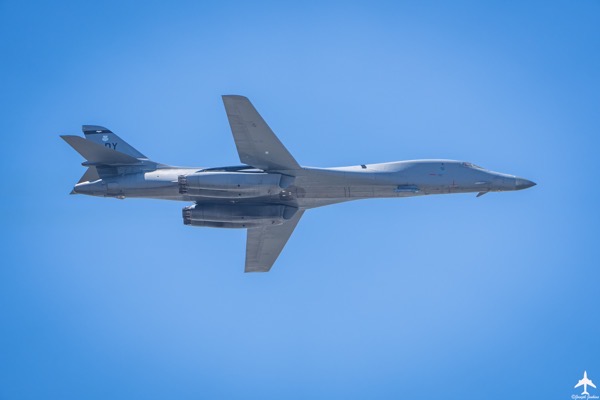
B-1B Lancer “bone” from Socal Airshow

2023 4 22 Socal Airshow 20230422 03238 extedit 2 Instagram

The Rockwell B-1 Lancer is a supersonic variable-sweep wing, heavy bomber used by the United States Air Force. It is commonly called the “Bone”. Max speed of Mach 1.25. The plane had a couple of production runs with the B-1A being started in the 70s, the B-1B was restarted in the 80s due to delays in the B2 program.

This is the bomber from the 37th squadron out of South Dakota that was on display at the Socal Airshow. This was shot during the takeoff and flyby at the airshow.