Thunderbirds 1-4 on a high speed pass with vapor trails.

Thunderbirds 1-4 on a high speed pass with vapor trails.
West Coast Rhino Demo Team at the 2022 Pacific Airshow showing some vapor trails as it performs during day 1 of the airshow.

The plane unfortunately had some mechanical difficulties and didn’t make a full flyover. Here are some shots and details from the day.
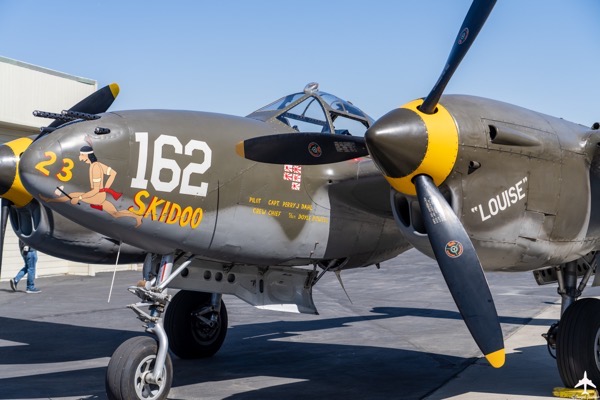
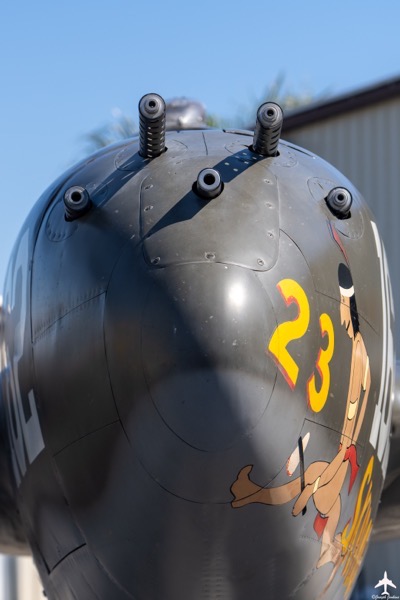
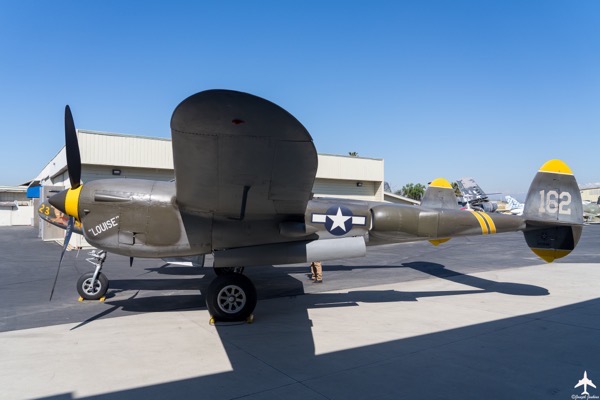
This is the plane that was used in Operation Vengeance and it was designed, first requested a design from the United States Army Air Force for their call for a high altitude dog fighter. could climb up to 20,000 feet in six minutes. And so it was awarded to Lockheed to develop this type of plane and this is the same Lockheed that became the Skunk Works. She’s a rare configuration because she has twin booms and the twin booms are there to accommodate the twin allison engine which each one is 1710 cubic inch displacements and 425 plus power. Armament was 4 50 caliber machine guns and 1 20 millimeter cannon. Now, if you know anything about the 50 caliber machine guns, you could fire anywhere from 600 rounds to 800 rounds a minute. That’s 13 bullets per second. So you multiply that by four, you have quite a bit of firepower. Also, the 20-millimeter gun alone is a huge, huge round that will destroy another aircraft. So they have 13 bullets coming out of each gun, every second, and they’re throwing a couple of pounds of hope in front of you. This design also allowed the armament to be mounted in the nose. And the mounting there, that means the pilot is shooting at what he wants to shoot at is the direction he’s flying at. before other planes have those 50 cals out on the wings and they have to compensate for something called converging fire which means you both all four guns have to be planes in a direction about 400 yards ahead of you. P-38 is not like that. You fly at what you want to shoot at. Of the 10,000 or so built, there are quite a few not unaccounted for. So we have maybe only six of these incredible planes that we can fly.



Thunderbirds 5 and 6 in the high speed pass. Unfortunately Day 2 wasn’t as nice, but at least I realized that I needed to pan from left to right vs right to left like I did on day 1. Pretty happy with this shot, just wish the background was nicer. Shot during the Naval Base Ventura County Pt Mugu 2023 Airshow, which included the Thunderbirds, Blue Angels, CAF SoCal, MH-60 parade, Vicky Benzing Aerosports, and more. This was taken with the Sony A1 and the Sony 200-600.

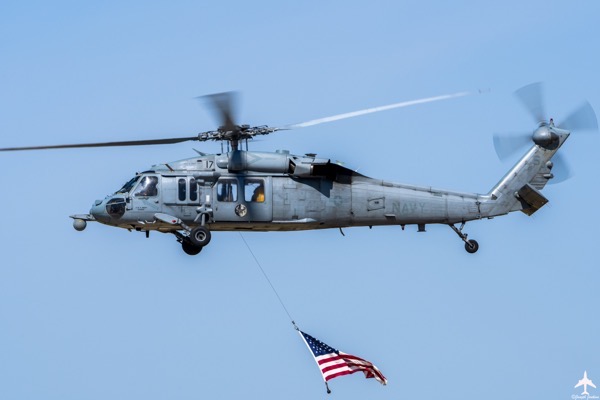
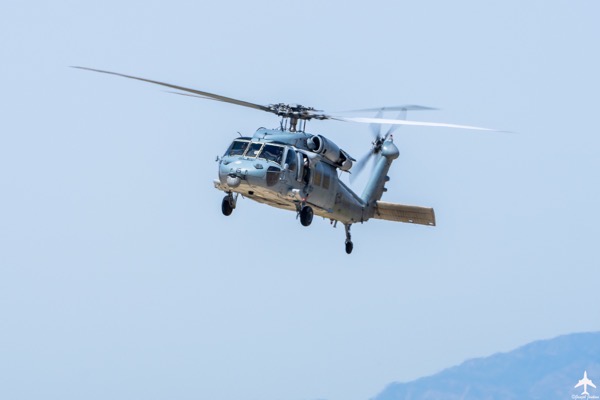
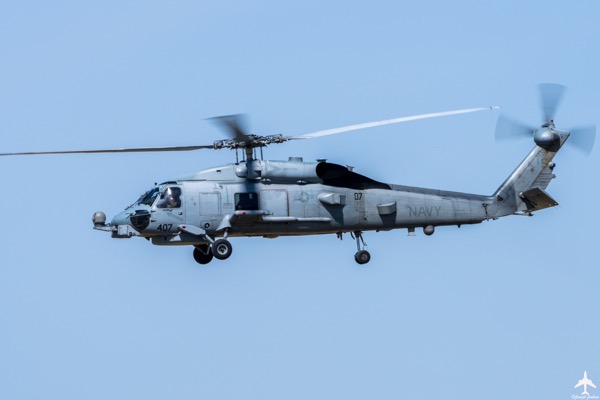
MH-60 Helicopter parade during Day 1 of the Naval Base Ventura County Pt Mugu 2023 Airshow, which included the Thunderbirds, Blue Angels, CAF SoCal, Vicky Benzing Aerosports, and more. This was an also special because it was an all female pilot parade of the helicopters.
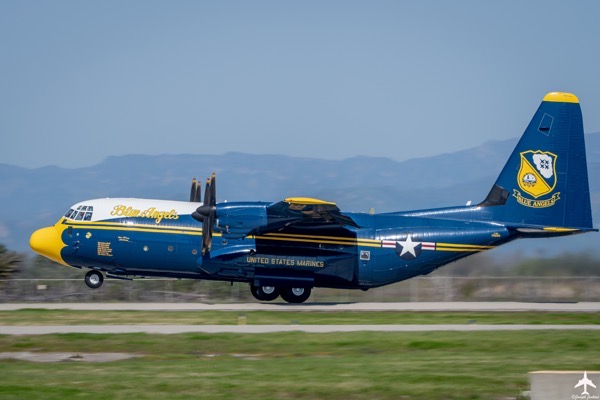
C-130 Hercules Fat Albert taking off from the Pt Mugu Airshow. This is part of the Blue Angels that is operated by an all Marine crew.
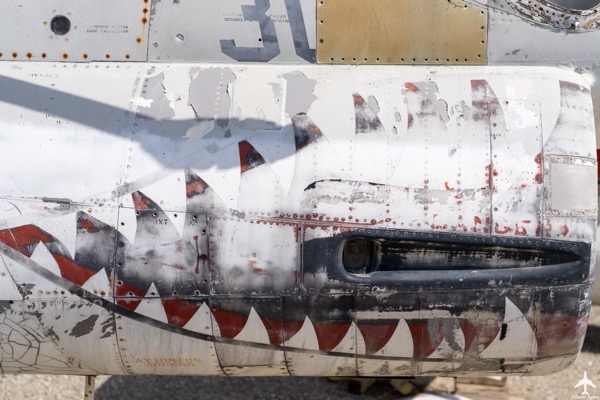
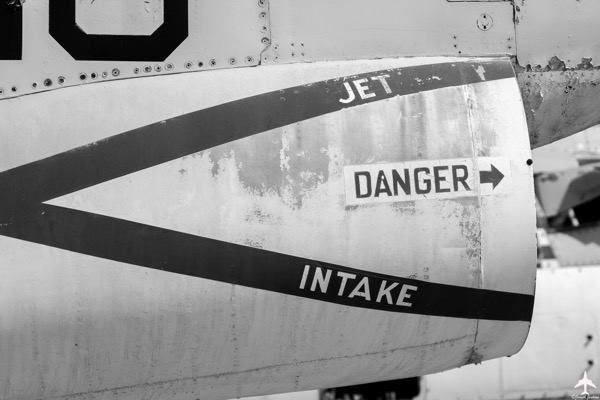
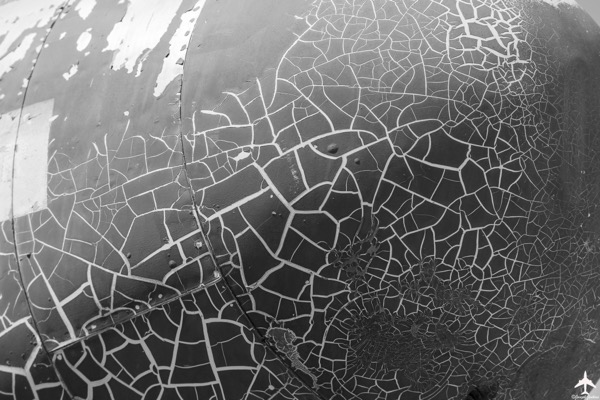
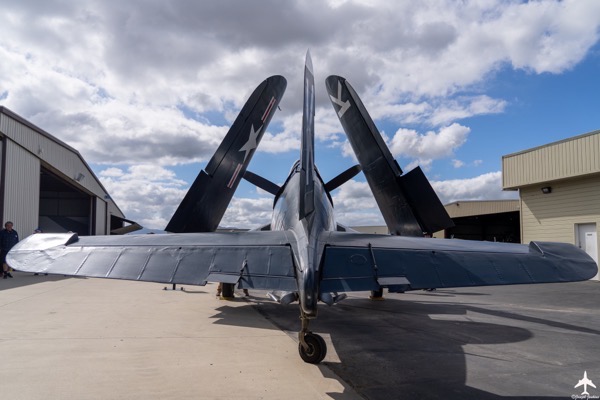
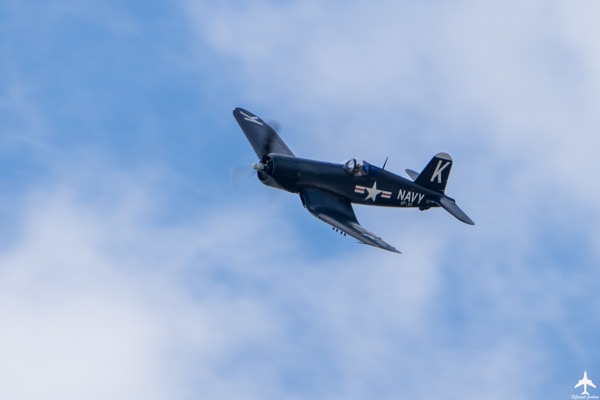
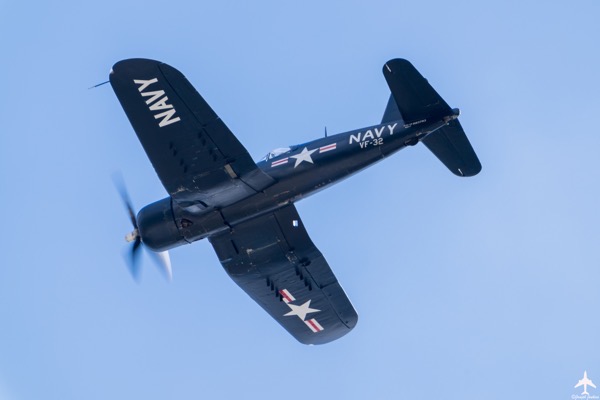
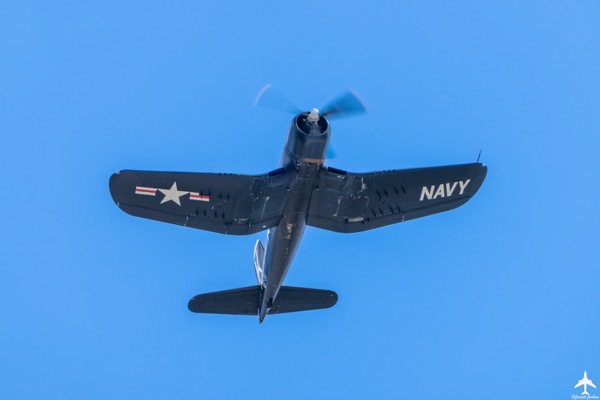
Shots from around the yard at Planes of Fame, just messing around and taking some random shots.

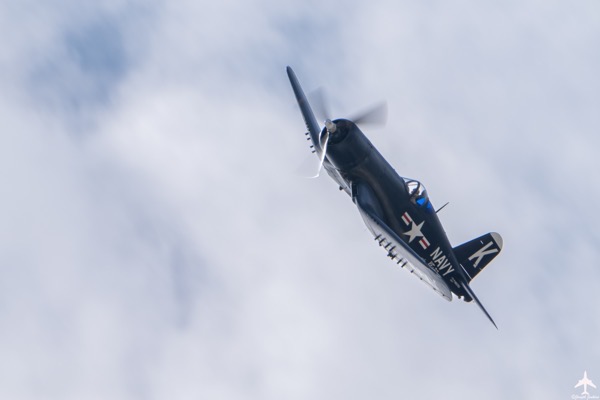
History on the Corsair
Going back to 1938 when the US Navy put out an RFP, it needed to have 4 requirements:
1. It had to fly a thousand miles, range of a thousand miles
2. It had to carry four guns
3. It had to have a stalling speed no higher than 70 mph
4. was maximum speed
The winner was the company Vought located on the east coast
They came up with this design, but in order to achieve the speed, they decided to go with a brand new prototype engine from Pratt & Whitney, which was the XR2800 engine that the prototype was capable of 1800 horsepower
The production model came out with 2000 horsepower
That’s what went into this airplane
And the design of the plane itself, you’ll notice that it doesn’t have rivets
It is a very smooth skinned airplane and that’s because Vought went with a new thinner aluminum and they use spot welding
So that achieved a much more even airflow a little bit higher speed as well
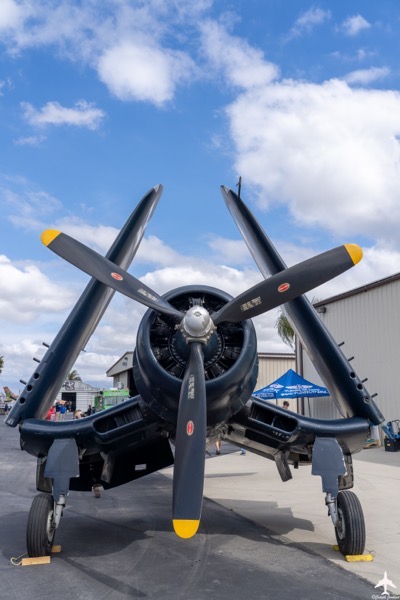
With the 2800 engine they went with a large Hamilton standard propeller 13 feet 4 inches
So how do you get a Navy airplane that is designed to land on aircraft carriers with that high of a propeller
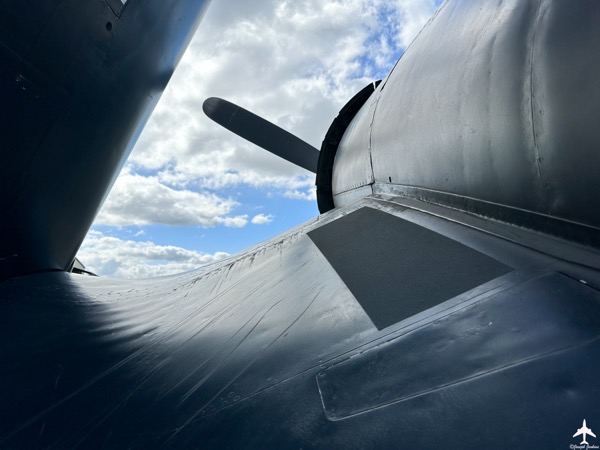
So that’s where the inverted gull wing design came in
Lift the nose of the use launch, get the propeller up
But the challenge then is how do you develop landing gear that’ll accommodate carrier landings
So with the speed, with the propeller wash of this massive propeller, the prop wash created a problem going over the wing
So the left wing would stall before the right wing it became a real challenge
As well you’ll notice that the cockpit is far back, the gasoline tank is there in front so that was a challenge for carrier pilots and landing
The stall speed coming in on an aircraft carrier needs to be a little bit low so we’ve designed this plane to be quite fast
It was one It was the first airplane as a matter of fact in I believe 1940 to break 400 miles an hour
But in order to develop an airplane that was passed, they sacrificed low landing speed
So these things had to be figured out and consequently through Navy trials, the Navy decided not to use the Corsair
Changes made by England
Number one, for carrier landings rather than a straight-on approach, they came up with a circular approach for the pilot always keeping the carrier in sight
Number two, they raised the seat another seven inches providing the pilot a little bit better visibility and they They also came up with this bubble canopy
So it wasn’t until the fall of 1944 that the Navy finally accepted the Corsair
But in the meantime, the Marines, of course, did quite well with it in the South Pacific and in the Central Pacific as wel
The plane was acquired by the planes of fame in 1970 and it was restored to flight in 1975
And it is one of the oldest corsairs that is still flying
The nickname for this airplane was the “Instant Eliminator.”
Had a kill ratio of 11 to 1 by the end of the war.


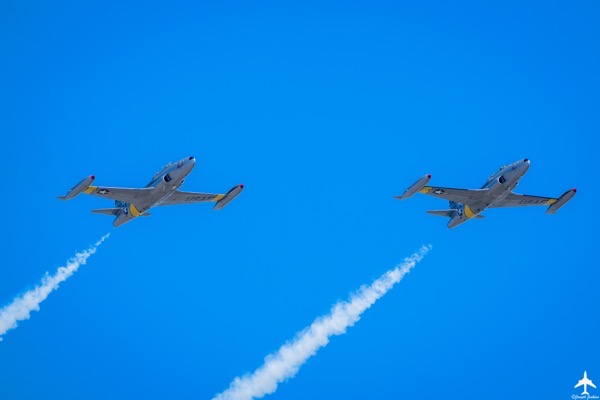
2 T-33s for the price of one flying at the Pacific Airshow. This is Acemaker and Greg Coyle performing at the show.
C-17 Globemaster III on a flyby at the 2022 Pacific Airshow. Really impressive what this big beast can do and how quickly it can take off and land.

 Joseph Jenkins