
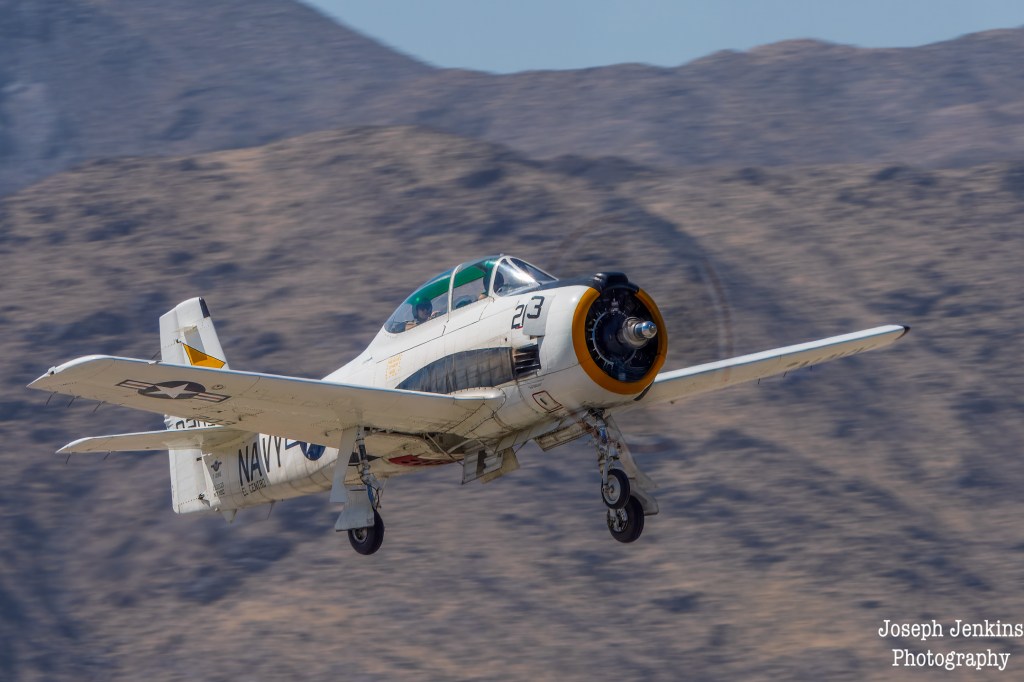
Somone is going out for a ride on the T-28B Trojan at the Palm Springs Airport. A trainer for the Navy, this plane takes off with the San Jacinto mountains in the background.
Somone is going out for a ride on the T-28B Trojan at the Palm Springs Airport. A trainer for the Navy, this plane takes off with the San Jacinto mountains in the background.


How it was made:
Russia said to the UK, “Can we have your jet engine?” Now, after World War II, England was broke. And they needed money. So, and they also wanted to keep Russia happy. So they said, “Yeah, we’ll sell you 25 of our jet engines.” Figuring they wouldn’t be able to make copies. Well, Russia made copies. Once they got the Rolls-Royce jet engine, they made a copy of it. The MiG-15 made its maiden flight in December 30th, 1947. The first production aircraft flew exactly one year later. It was in the frozen skies of Korea that the MiG-15 proved one of the most horrible fighters of its generation. On November 8th of 1950, MiGs tangled with United States Air Force F-80Cs, Lieutenant Russell Brown downed one of the Communist fighters in the history’s first jet-to-jet dog flight. Despite this initial success, the performance of the swept-wing MiG was far superior to that of the straight-wing aircraft like the F-80 and the Navy’s F-9F Panther. Because of that, the fourth fighter wing in the United States with its F-86A Sabers were rushed to the far east to clash with the MiGs in the first time of December. For the next two and a half years, Sabers and MiGs, frequently flown by Russian and other Eastern Bloc pilots, doled in the skies over the Yahoo River in the area called MiG Alley. At the end of the Korean War, Sabers pilots claimed a kill ratio over their opponents of 7 to 1. This lopsided total, usually attributed to the superior training given to United States Air Force pilots. The West got his first close-up look at a MiG-15 in September of 1953 when a North Korean pilot defected. MiG-15 served with virtually every Air Force in the Communist Bloc, including those of the Soviet client states in Latin America, Africa, and in the Middle East. Some soldiered on into the 1970s. Over 17,000 aircraft were built in Russia, Poland, and Czechoslovakia. Thousands more were built in China. The museum aircraft is an early model MiG BIS. All parts, including the engine, were manufactured at the State Aircraft Laboratory 1 in Franzie Airfield, Moscow in the Soviet Union in 1951. The parts were shipped to the People’s Republic of China for final assembly at their Xinhai facility. While serving with the People’s Liberation Army Air Force as what they called the J-2, several modifications were made to the aircraft. It may have participated in the Korean conflict and was exported to the United States in the 1980s and acquired by a private family. They generously donated it to the museum. This airplane has flown in a couple different movies. One of the movies you might know of is the movie “Devotion,” and the aircraft was based in a town called Wenatchee, which is up in the state of Washington, where they used the Cascade Mountains as a simulation of Korea during the Korean War. The museum owns three MiG 15s. Two are airworthy, and one is on static display.
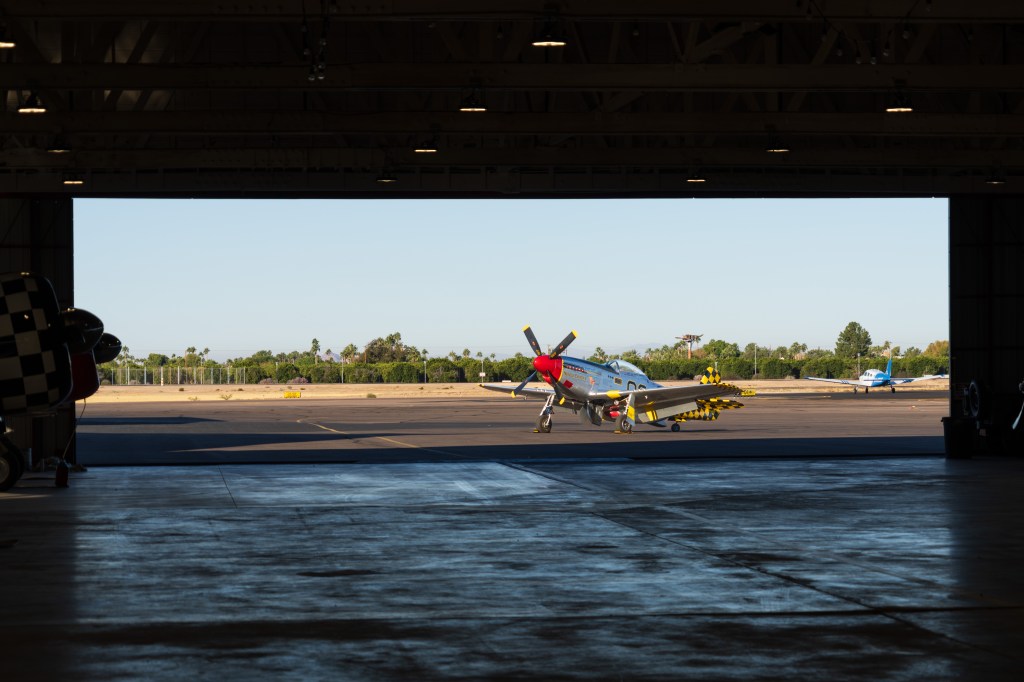
Beautiful P-51D plane at the Wing of Flight Foundation hangar in Mesa Arizona. Plane is sitting out getting some sun and framed by the hangar. We shot the plane early in the morning at sunrise and then spent the rest of the day shooting Air 2 Air shoots.

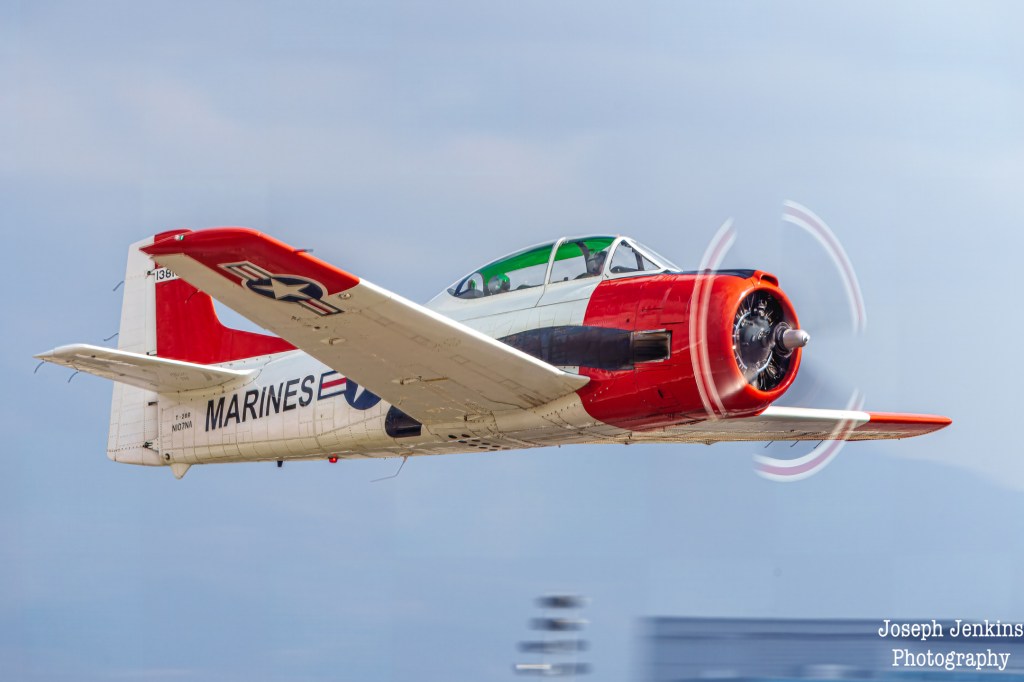

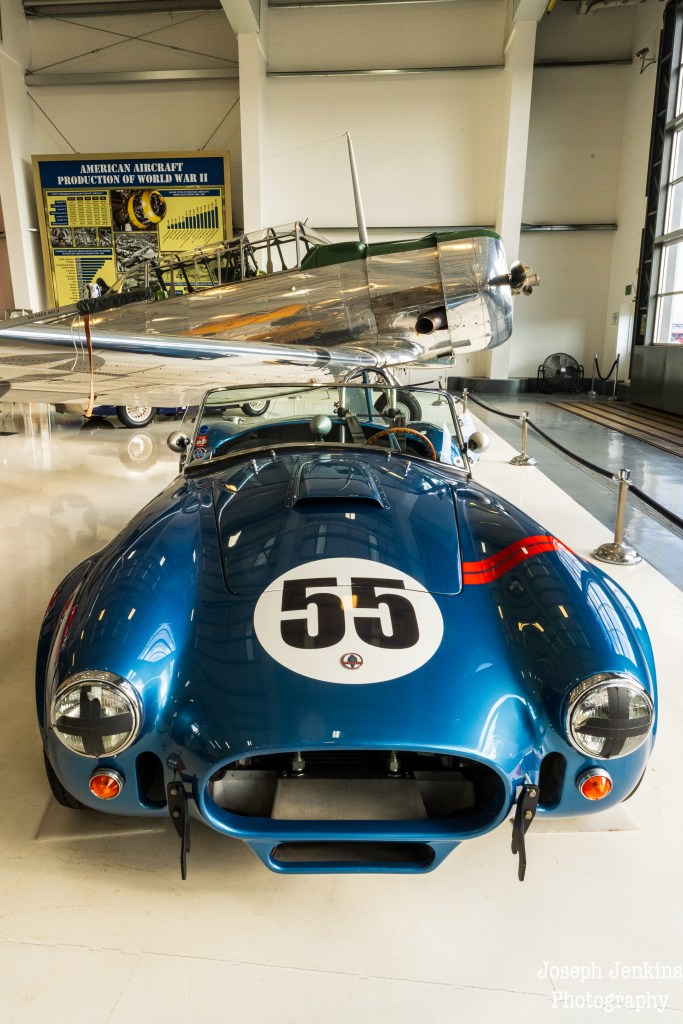
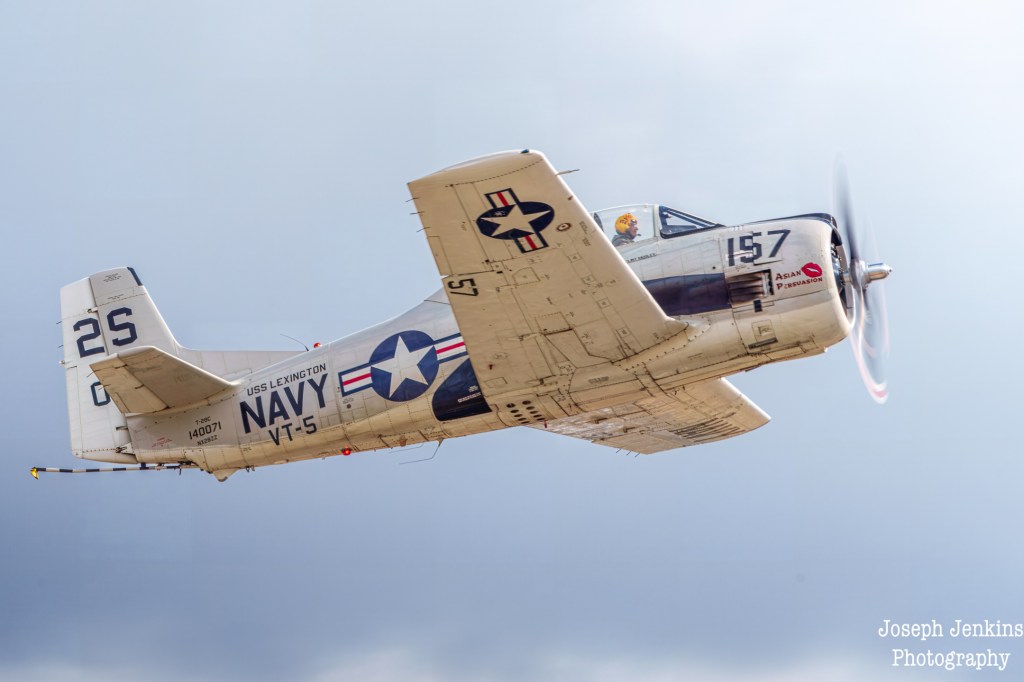

First time at the Lyon Air Museum, for one of their events on the flightline. Really a great museum with a lot of nice planes. It also helps that you are on the SNA flightline and can capture planes coming and going. During the event some of the planes ended up taking off so I was able to capture some in flight shots as they left.

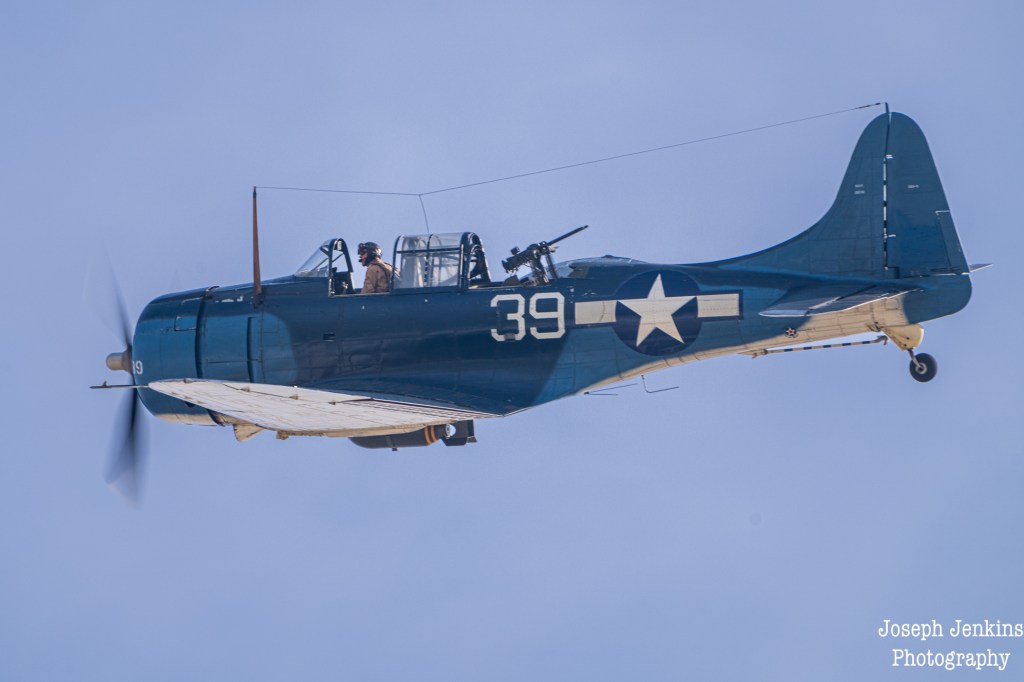
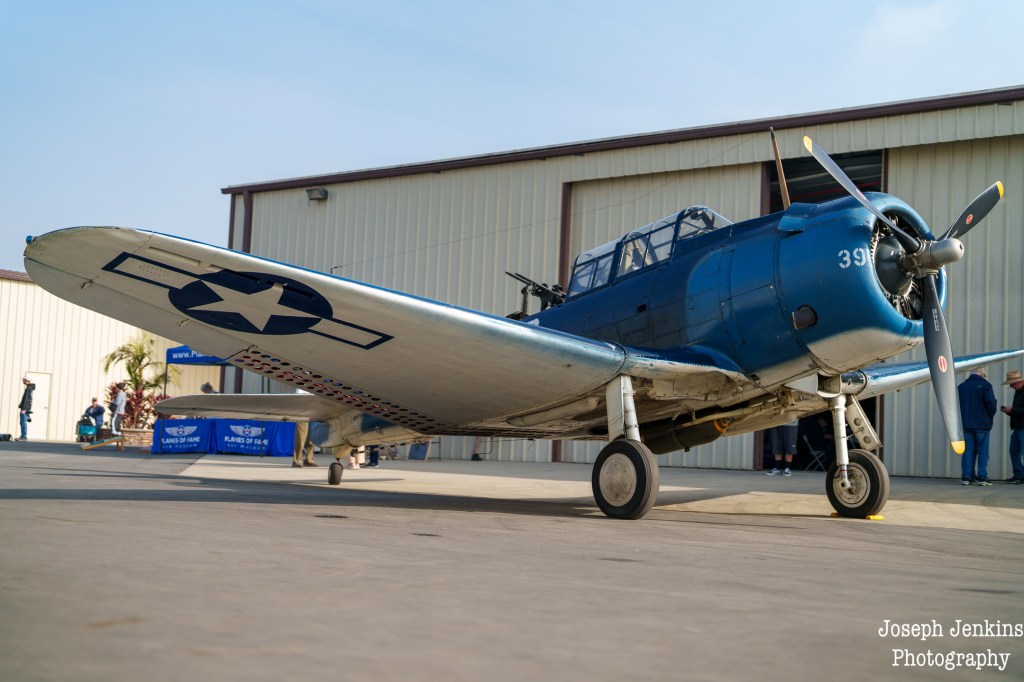
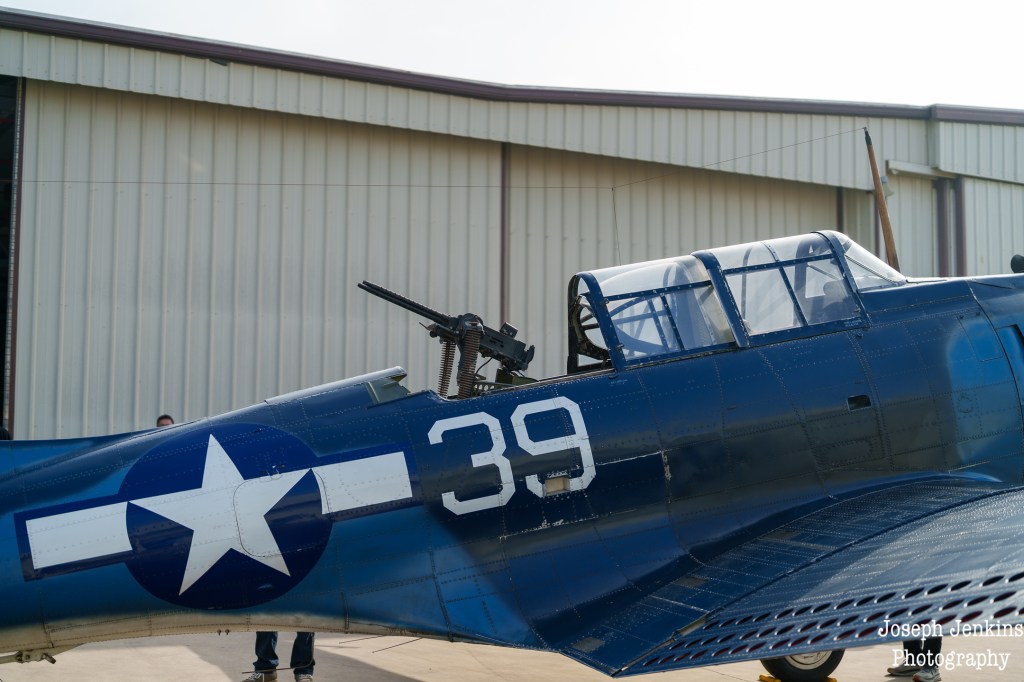

The Museum’s SBD-5 is a World War II Combat Veteran. Following shipment to Espirito Santo in the combat zone, the aircraft was assigned to Squadron 25 of the Royal New Zealand Air Force. It flew 28 combat missions from the South Pacific island of Bougainville. In May 1944, it transferred to the U.S. Marine Corps. For the remainder of the war the aircraft served with six different Marine and U.S. Navy squadrons. After the war, it was sold to Warner Bros, appearing in films and serving as a wind machine. The Museum acquired it in 1959 and restored it to flight in 1987.
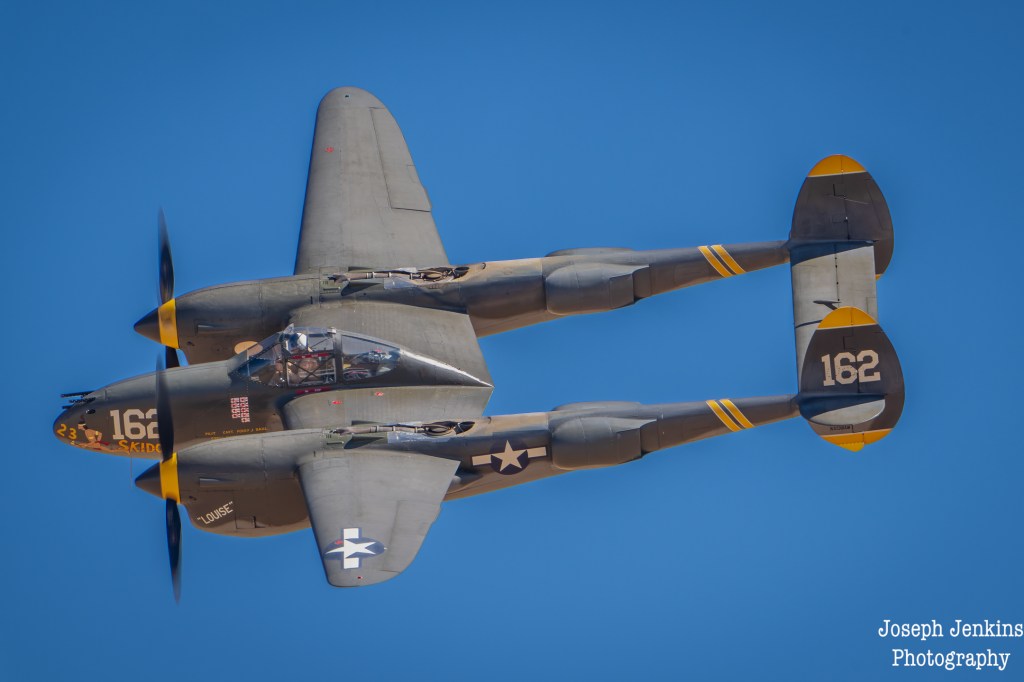
Planes of Fame P-38J on a flyby at the 2023 Apple Valley Airshow. Some details on the plane from the Planes of Fame website:
The Museum’s P-38J, built in Burbank, California and delivered into service in May 1944, has the distinction of being the 5,018th P-38 built – halfway to the total number of “Lightnings” produced. It was assigned to the 483rd Air Base Squadron in Santa Maria, California – a Replacement Training Unit providing combat crew training for P-38s during WWII. In September 1945, the aircraft transferred to the Hancock College of Aeronautics where it was used to instruct maintenance personnel. The Museum acquired the aircraft in 1959. In 1988, it was restored to flight thanks to a generous donation from Bob and Josie Pond. The museum’s P-38 was used in the filming of Iron Eagle III.
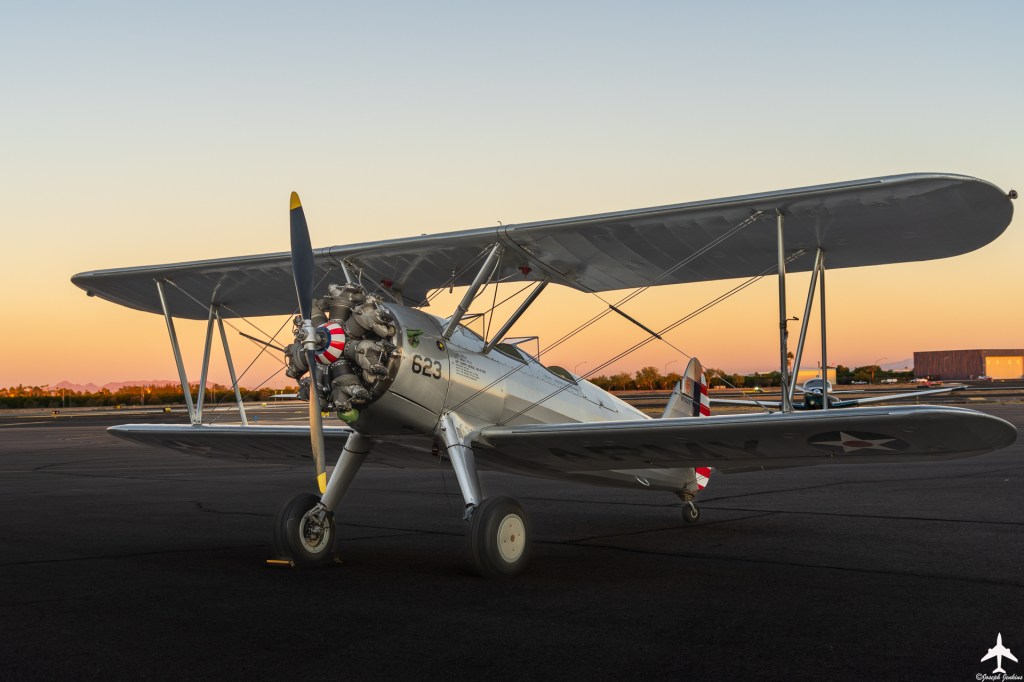
PT-17 primary trainer for the military. Last of the 3 planes that we shot during the morning static shoot before the Air 2 Air shoot. Nice plane with nice light. Used the Sony A1 with the 24-240 lens.

Nervous Energy P-51D from the Wings of Flight Foundation. Early morning shoot before our Air 2 Air sessions, later in the day. Used the Sony A1 with the 24-240 lens and then processed in Lightroom. Beautiful Arizona morning.

Spent a weekend at the Falcon Airfield and did an early morning shoot at the Wing of Flight Foundation. This is their AT-6 Dulcinea, that they brought out onto the ramp for us to shoot. There were a couple of other planes out there, but this is also one we got to shoot during the Air 2 Air shoot. The AT-6 is the advanced trainer for the Army/Air Force.
This plane is on loan to the Air Museum and they used it for the November Hangar Talk. The place is much bigger than I thought it was. I was really surprised at the size of it. Here is some excerpts from the talk they gave describing the plane.
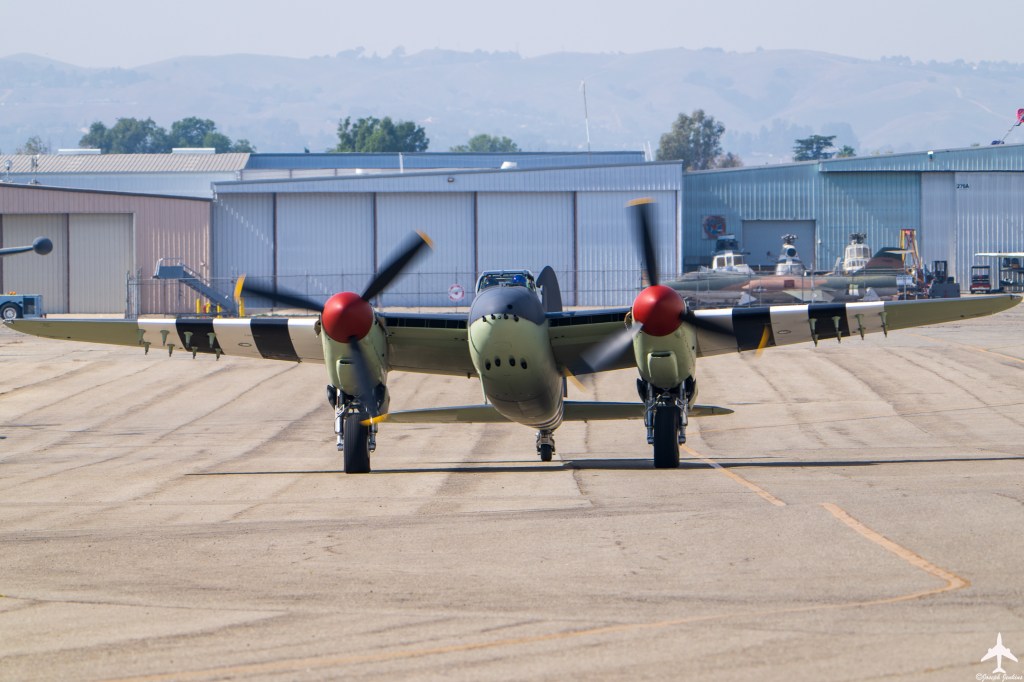
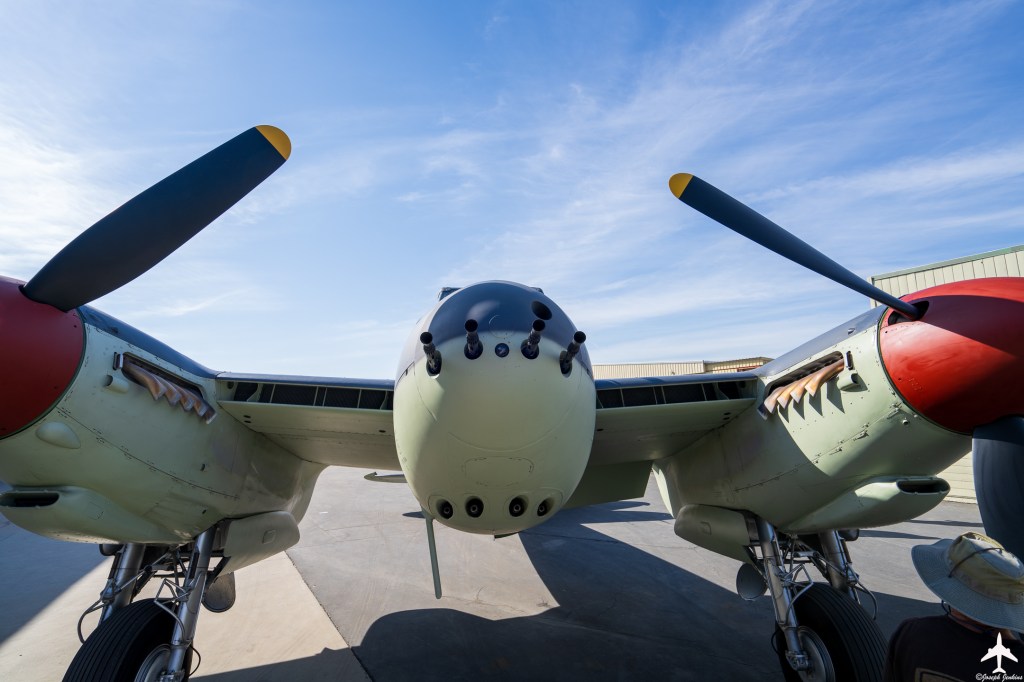
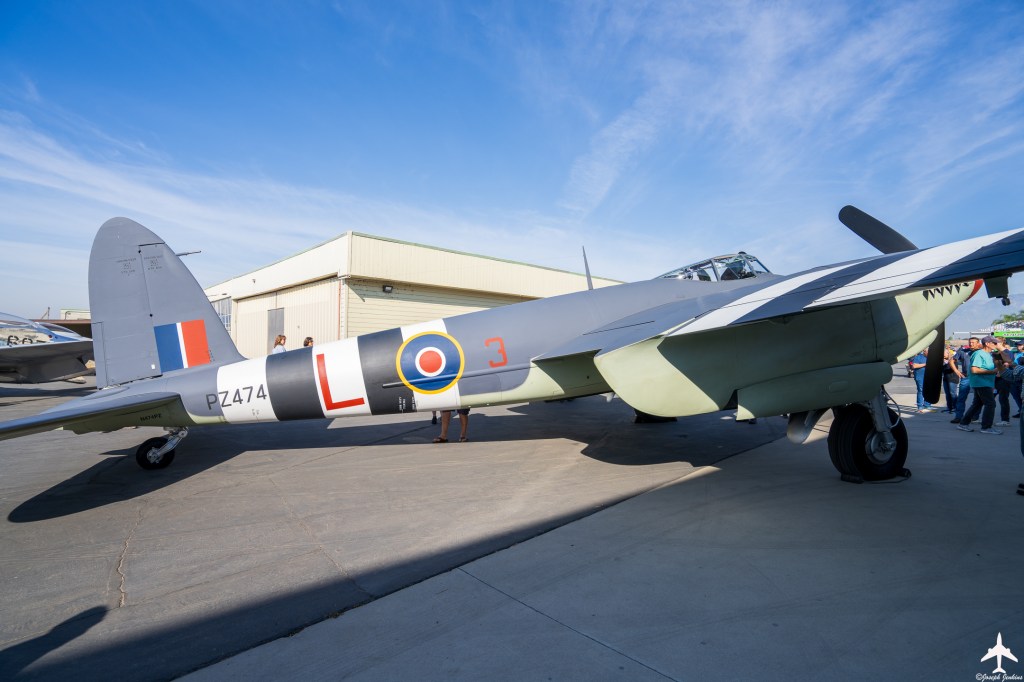
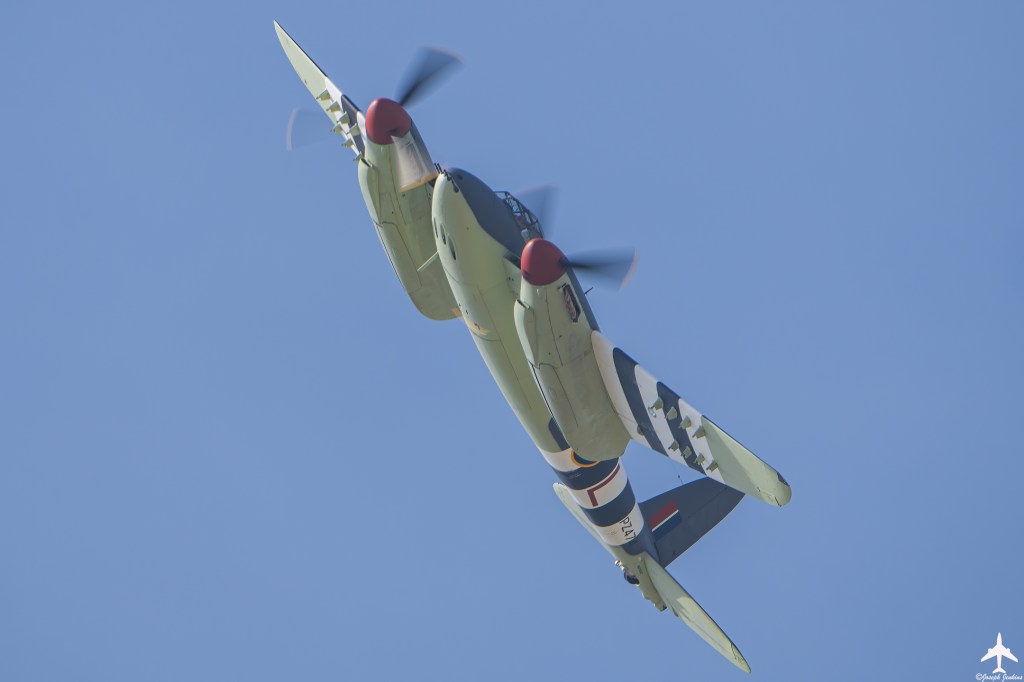
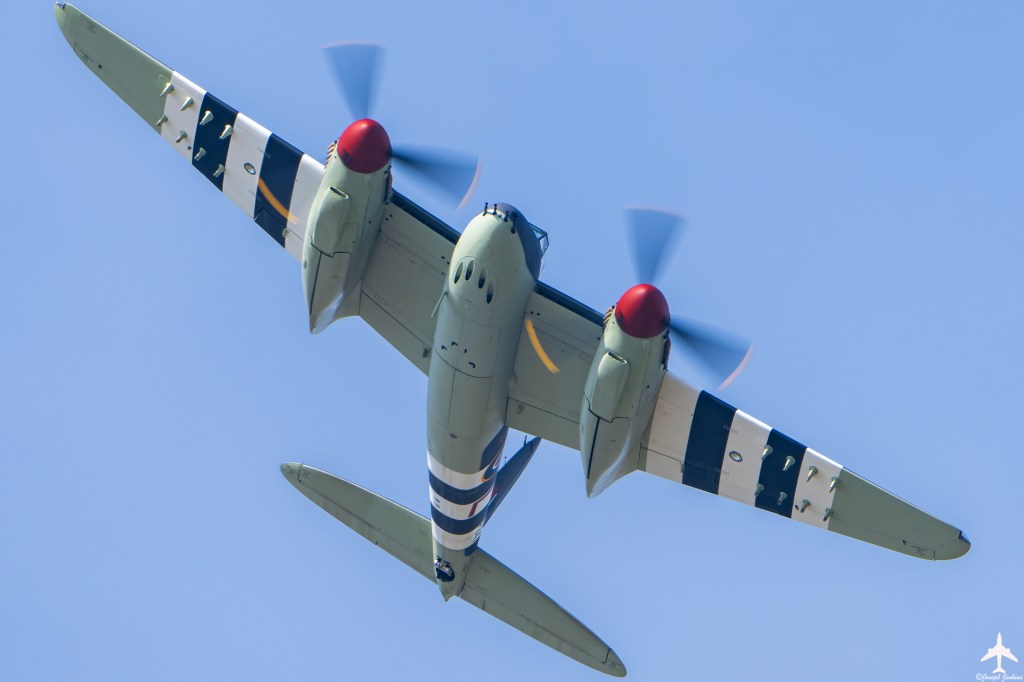
Generally armed with four .303-calibre machine guns and four 20-mm cannons, all firing through the nose
And this is the configuration you can see in the C5 today. Again, to do its exceptional speed, it soon became clear that it would make an excellent night fighter.
We’re able to sneak up on German aircraft and shoot them out of the sky. Later the night fighters were also used on intruder missions, attacking German airfields at night. I mentioned the use of the 57 millimeter tank gun as it’s being installed on the ski gun to give it increased firepower.
This allowed the aircraft to serve as a tank buster and as the short video shows, an anti -ship vehicle. The C5 is a nice feature of the 6 -bar gun and it fires at a rate of 25 general in 26. It remains effective against property from small shipping companies.
when Squadron number 811 is the first production aircraft, it only had a short operational life as a frontline aircraft. The Squadron was disbanded in 1947, but there’s time that they have one C -Running, the Mitchell’s, the Navy.
At the end of the aircraft’s operational life, many of the skills were part of the service. Again, due to its speed, the skills were ideal for this role, as they could go fast enough for the first generation of a disjettler to have to shoot at the targets.
The Mosquitoes had a long life, for 23 years. The crew could speed as much of weapons as any armament. Most importantly, the Mosquitoes were much loved by the crews and by their allied nations. The film and street speech of the Mosquito Union roles in at least three films The Mosquitoes served in Europe, Mediterranean and the parties And the lowest loss of any combat aircraft in the war The air -credited with over 700 enemy aircraft shot down As well as destroying more than 600 B1 flying bombs destroyed in the air Including their wartime service and their post -war service They ultimately served in 18 different countries They continued in service with the boiler force until 1963.
 Joseph Jenkins