Planes of Fame A6M5 Zero

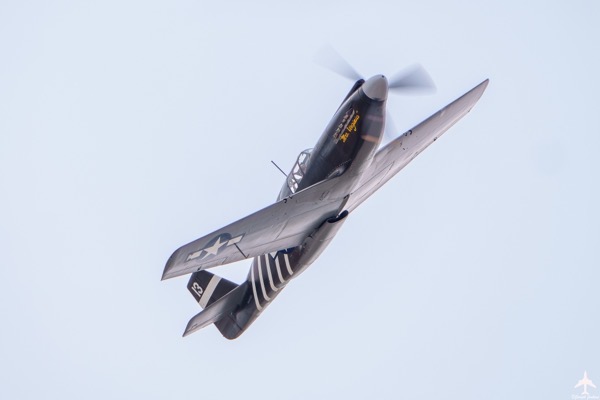
No fighter aircraft from WWII so captured the imagination of the public and the acclaim of history as the Mitsubishi A6M Type 0 (Zero) family of fighters. They were fast, versatile, highly adaptable, and in the hands of a skilled pilot, packed a deadly punch. The A6M was designed to fly long-range missions, requiring its weight to be held to a minimum. Each aircraft was built of lightweight duralumin which gave it strength. It had a high-lift, low-speed monoplane wing which could out-turn any allied fighter of the early war period. To further keep the aircraft light and fast, there was no armor plating to protect the pilot or engine, and there were no self-sealing fuel tanks. The first aircraft went into operation in July 1940 against the Chinese Nationalist Air Force. At the time of the Pearl Harbor mission, 521 A6M aircraft were active in the Pacific. Allied pilots quickly learned that their aircraft were no match for the A6M the allied code name for the Zero was “Zeke”). Special “hit and run” tactics were developed by allied pilots to counter the “Zeke’s” strengths. These tactics cost Japan many of its most experienced aviators. Throughout the war, the A6M went through a number of advancements and improvements. The A6M5 Type 0 Model 52 variant (the Museum’s aircraft) entered service in June 1943. Over 6,000 versions would be produced, the most of any Zero aircraft. At this same time, new allied fighters such as the FU “Corsair” and F6F “Hellcat” entered combat. Their speed and agility matched those of the Zero, which now found the lack of armor and self-sealing fuel tanks to be its downfall. Combined with the growing problem of not enough skilled pilots, many Zeros were used for Kamikaze suicide missions. With the war’s end, production ceased. Nearly 11,000 A6M aircraft were produced from 1940 to 1945.

August Hangar Talk at Planes of Fame TBM Avenger

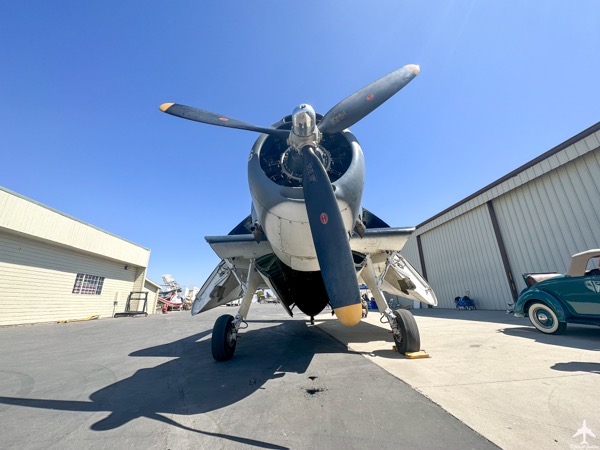
The August Hangar talk was the museum’s TBM Avenger Torpedo Bomber. From their description of the plane:

The TBF/TBM “Avenger,” designed and first built by Grumman Aircraft and later produced in greater numbers by the Eastern Aircraft Division of General Motors, was the definitive torpedo bomber of WWII. Rugged and versatile, its service continued in military circles into the late 1950s. “Avengers” also flew as firebombers with the U.S. Forest Service and in other civilian roles until the 1980s.

The aircraft first took form in 1939 when the U.S. Navy issued specifications for a new aircraft to replace the obsolete Douglas “Devastator” torpedo bomber. Grumman, highly regarded for their sturdy, high-performance Naval fighter aircraft, engineered a well-armed bomber capable of carrying up to 2,500 lbs. of torpedoes, bombs, and depth charges in an internal bomb bay as well as rockets, fuel drop tanks, or radar pods on its wings. Named the “Avenger” by the Navy, the aircraft featured a bulging all-metal fuselage with a mid-wing configuration. To optimize storage on even the smallest of aircraft carriers, the wings folded back against the fuselage. The crew consisted of the pilot; a rear-facing gunner in an electric gun turret; and a radio/radar operator/bombardier.

Production of the first 286 TBF (“F” for Grumman) aircraft began in late 1940 with delivery in January
1942. At that time, based upon the Navy’s demand for the “Avenger” as well as for other Grumman fighters (F4F and F6F), production was sub-contracted to the Eastern Aircraft Division of General Motors. This division, comprised of five now-idle automobile factories, would produce 7,456 TBM (“M” for General Motors) aircraft over the next three years. Grumman built a total of 2,383 TBF aircraft.

During WWII, the “Avenger” served with the U.S. Navy and Royal Navy in the Atlantic where they played a key role in stopping the German U-boat threat against Allied shipping. In the Pacific, the torpedo bombers were involved in the sinking of twelve Japanese aircraft carriers, six battleships, nineteen cruisers, and twenty-five destroyers and smaller craft. U.S. Navy and U.S. Marine Corps
“Avengers” dropped 32,700 tons of bombs/torpedoes and shot down ninety-eight enemy aircraft.
The aircraft continued to serve in the Korean War, although limited to radar and utility capacities.
IMG 1616 InstagramIMG 1592 InstagramIMG 1586 InstagramA1100095 Instagram